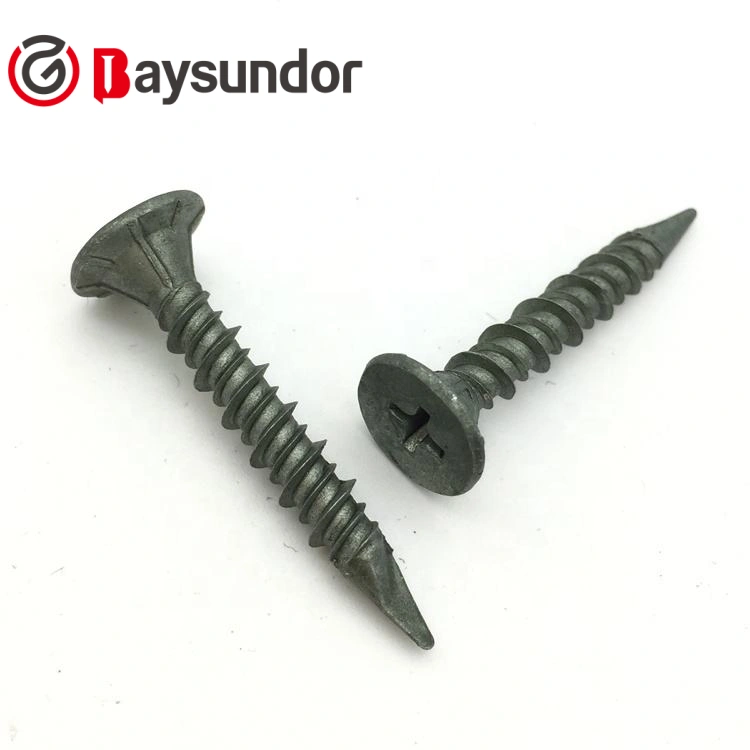
Complete Technical Information Manual for Cement Board Screws
I. Product Definition & Basic Applications
1.1 Product Definition
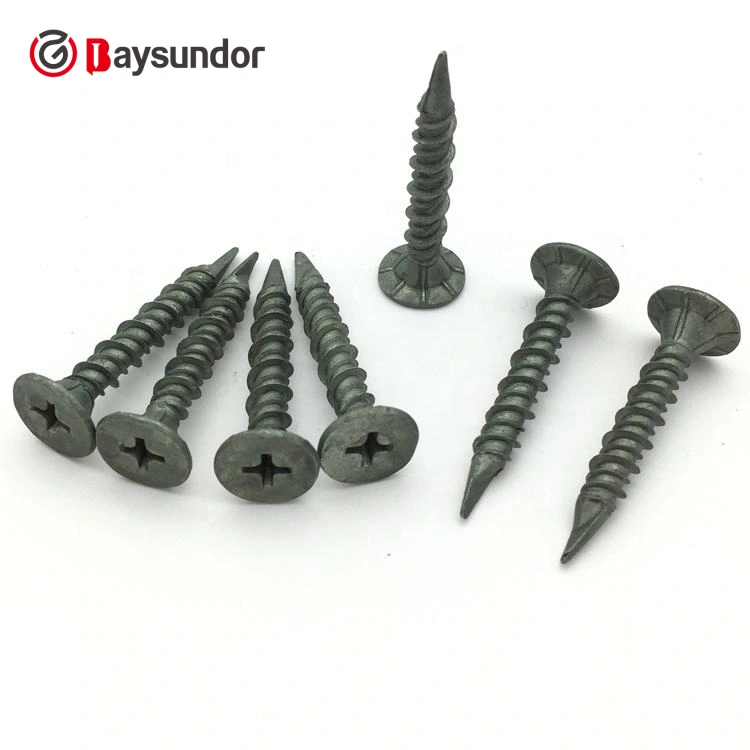
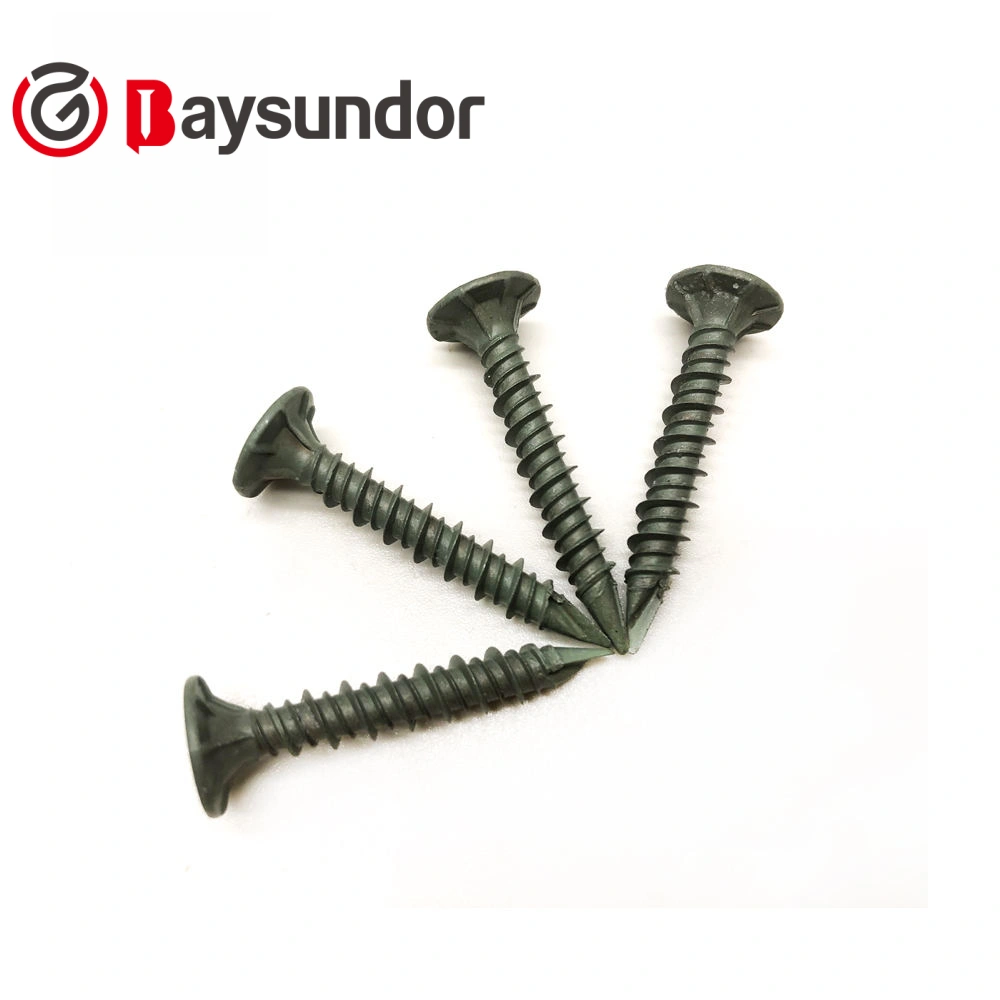
Cement board screws are self-drilling, self-tapping fasteners specifically designed for securing cement fiber boards, calcium silicate boards, gypsum boards, and other rigid panels to metal (e.g., light gauge steel studs) or wooden substrates. Their core feature is the ability to penetrate hard panels and form secure threaded connections in thin-walled studs without pre-drilling, while offering excellent corrosion resistance and precise countersinking control. They are critical consumables in modern dry construction systems.
1.2 Core Value
Efficient Installation: Self-drilling tip design eliminates the pre-drilling step, significantly boosting work efficiency.
Perfect Countersink: Head shape specifically designed for paneling ensures the screw sinks precisely flush with or slightly below the panel surface, facilitating seamless finishing and a perfect wall finish.
Exceptional Rust Resistance: Special coatings effectively resist alkaline substances leached from cement boards and corrosion in humid environments, ensuring long-term durability.
Prevents Panel Fracture: Unique thread design efficiently removes debris, reduces installation stress, and prevents chipping on hard panel edges or surface bulging.
1.3 Basic Application Fields
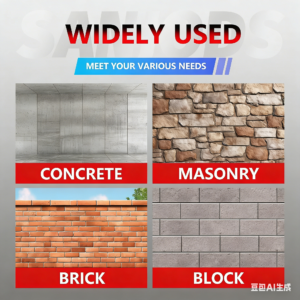
Interior Renovation: Installation of cement backer boards in wet areas (bathrooms/kitchens), tile underlayment fixing, partition wall systems.
Exterior Cladding: Fixing cement fiber siding, ventilated rain screen cladding panels.
Fire-Rated Construction: Installation of fire-rated panels for fire partition walls and ceilings.
Flooring Systems: Securing cement particle boards onto wooden or concrete subfloors as leveling underlayment.
II. Classification System (Multi-Dimensional)
| Dimension | Specific Type | Key Features & Application Scenarios |
|---|---|---|
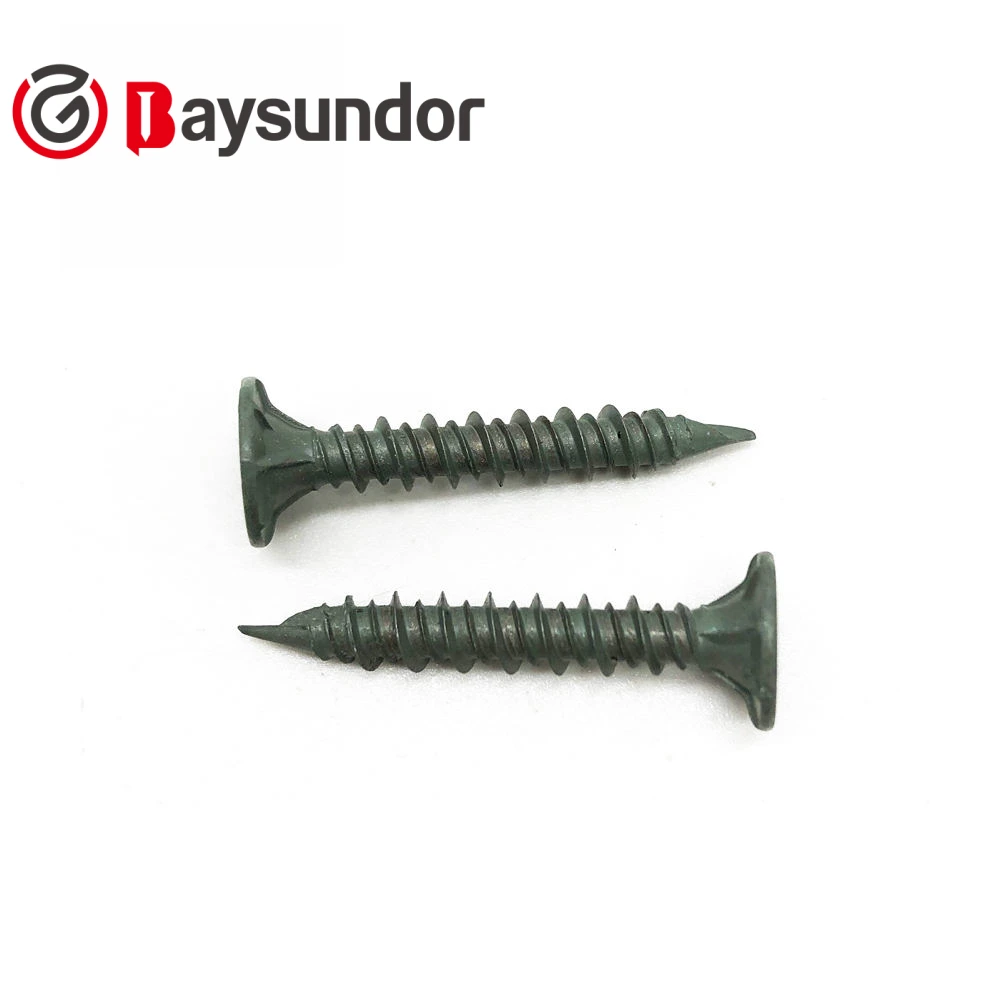
| By Thread Pattern | Hi-Lo (Dual Lead) Thread | The standard & optimal choice. High threads provide strong pull-out resistance; low threads efficiently remove debris, preventing panel fracture. Suitable for all types of cement boards. |
| Single Deep Thread | Fast driving speed, excellent performance on wooden studs, but prone to binding in hard panels and metal studs. | |
| By Head Style | Bugle Head / Flat Head | Most common countersink design, provides a smooth transition for perfect filling and finishing. |
| Large Round Head / Mushroom Head | Large bearing surface, used for fixing very fragile or thin panels to prevent the screw head from pulling through. | |
| Washer Head | Head integrates a rubber or nylon washer, providing better sealing and resistance to pull-out/vibration loosening, suitable for areas subject to vibration or requiring waterproofing. | |
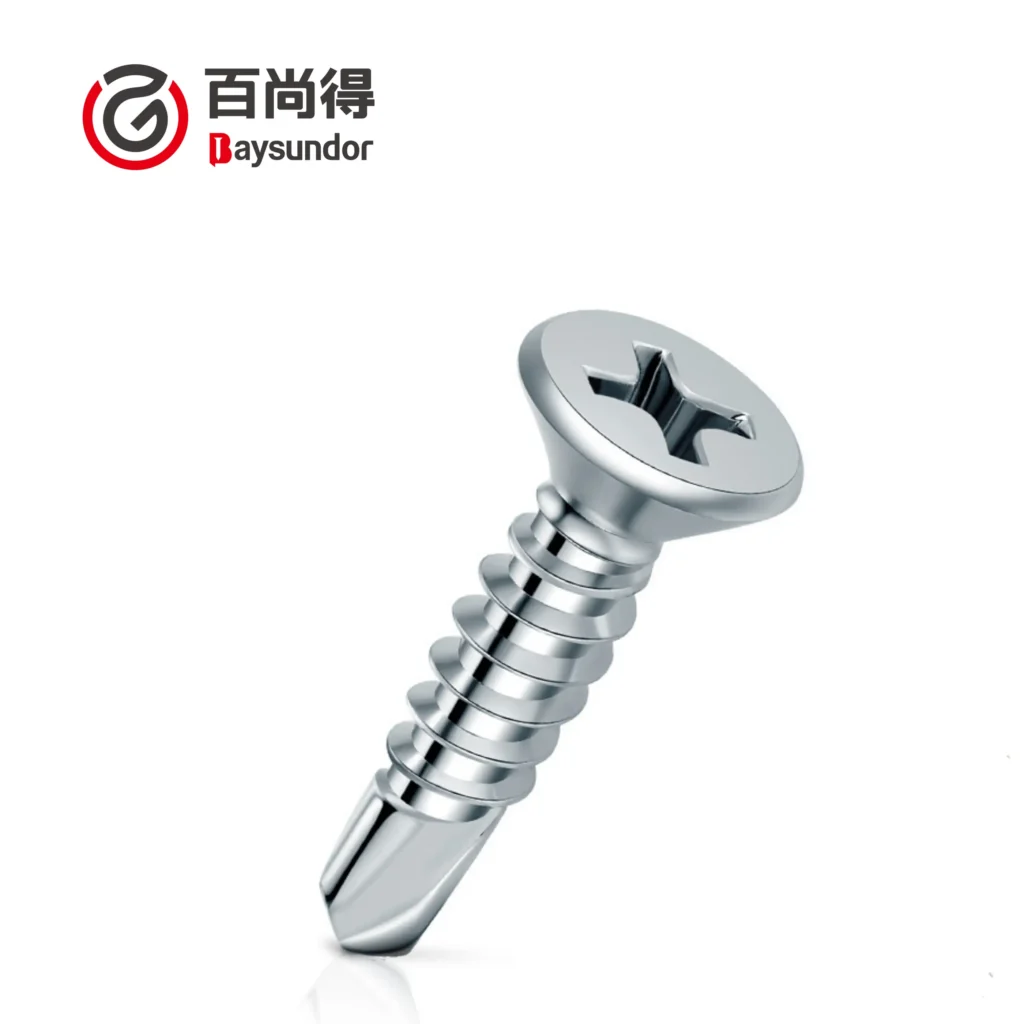
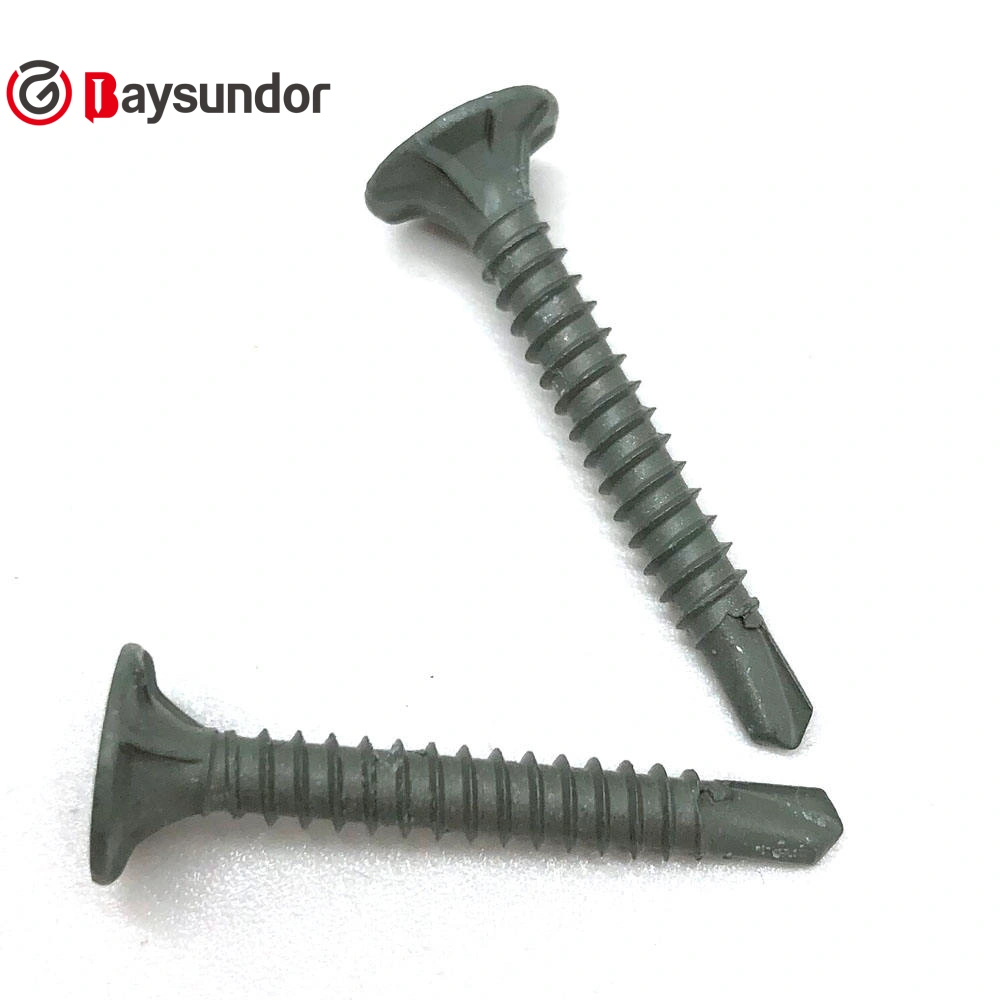
| By Point Design | Self-Drilling Point (with flutes) | Essential feature. Tip acts like a drill bit with cutting flutes, capable of drilling through metal studs (typically up to 1.0mm thick steel). |
| Blunt Point | Suitable only for pure wooden substrates, not recommended for cement board & metal stud combinations. | |
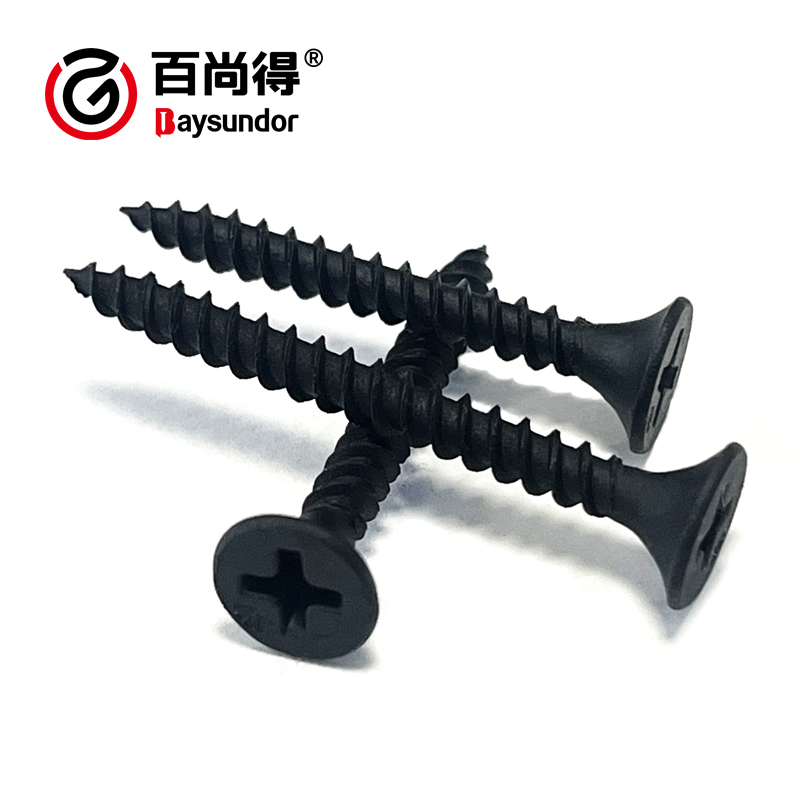
| By Finish/Material | Phosphated (Black) | Basic rust prevention, only for short-term indoor dry environments. |
| Zinc-Plated (Silver) | Provides general rust protection for standard indoor environments. | |
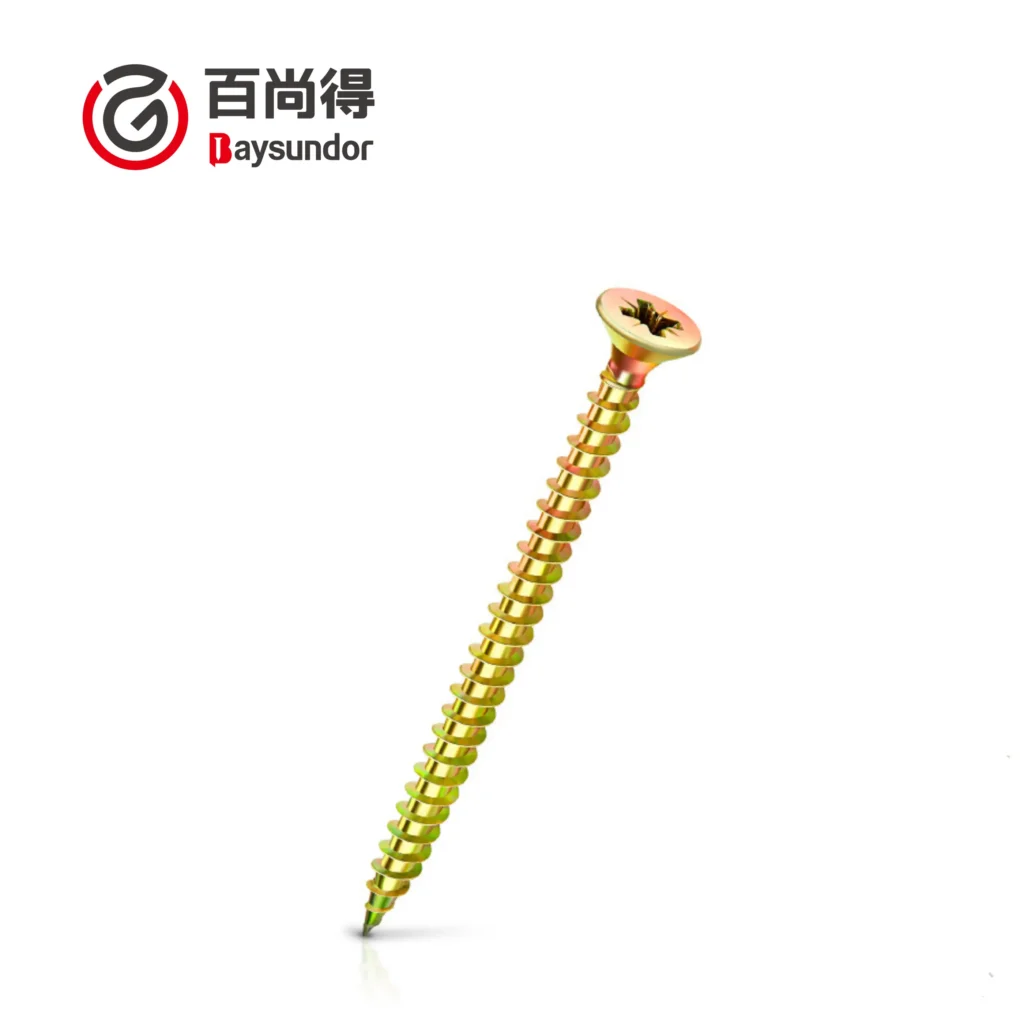
| Corrosion-Resistant Coating (Colored) | Industry standard. E.g., epoxy coating, polymer coating (common in yellow-green, blue, red). Offers superior alkali and rust resistance, the first choice for wet areas (bathrooms, exteriors). | |
| Stainless Steel (A2/A4) | Highest corrosion resistance grade, for extreme humidity, highly corrosive environments, or long-term assurance projects (e.g., swimming pools, coastal buildings). |
III. Specifications & Technical Data
3.1 Standard Specification Table (Example)
| Model | Material | Finish/Color | Diameter (d) | Length (L) | Head Type | Approx. Qty/Kg | Standard Packaging |
|---|---|---|---|---|---|---|---|
| CB-3.5×25 | Carbon Steel | Corrosion-Resistant Coating (Yellow-Green) | 3.5mm | 25mm | Bugle Head | 1600 pcs | 200 pcs/box, 10 boxes/carton |
| CB-3.5×32 | Carbon Steel | Corrosion-Resistant Coating (Yellow-Green) | 3.5mm | 32mm | Bugle Head | 1250 pcs | 200 pcs/box, 10 boxes/carton |
| CB-4.2×32 | Carbon Steel | Corrosion-Resistant Coating (Blue) | 4.2mm | 32mm | Washer Head | 850 pcs | 100 pcs/box, 10 boxes/carton |
| CB-4.2×50 | Stainless Steel A2 | Natural | 4.2mm | 50mm | Bugle Head | 520 pcs | 100 pcs/box |
3.2 Key Performance Parameters
Core Hardness: HRC 52-58 (ensures driving strength, prevents twisting/shearing).
Drilling Capacity: Capable of self-drilling through standard galvanized light gauge steel studs (typically thickness ≤1.2mm).
Minimum Clamp Load Torque: Provide reference values (e.g., CB-3.5×25 ≥ 1.5 N·m) to guide power tool settings.
Coating Thickness: ≥ 8 μm (for colored coatings).
Salt Spray Test Standard: Corrosion-resistant coatings typically require passing 500+ hours of Neutral Salt Spray test (ASTM B117).
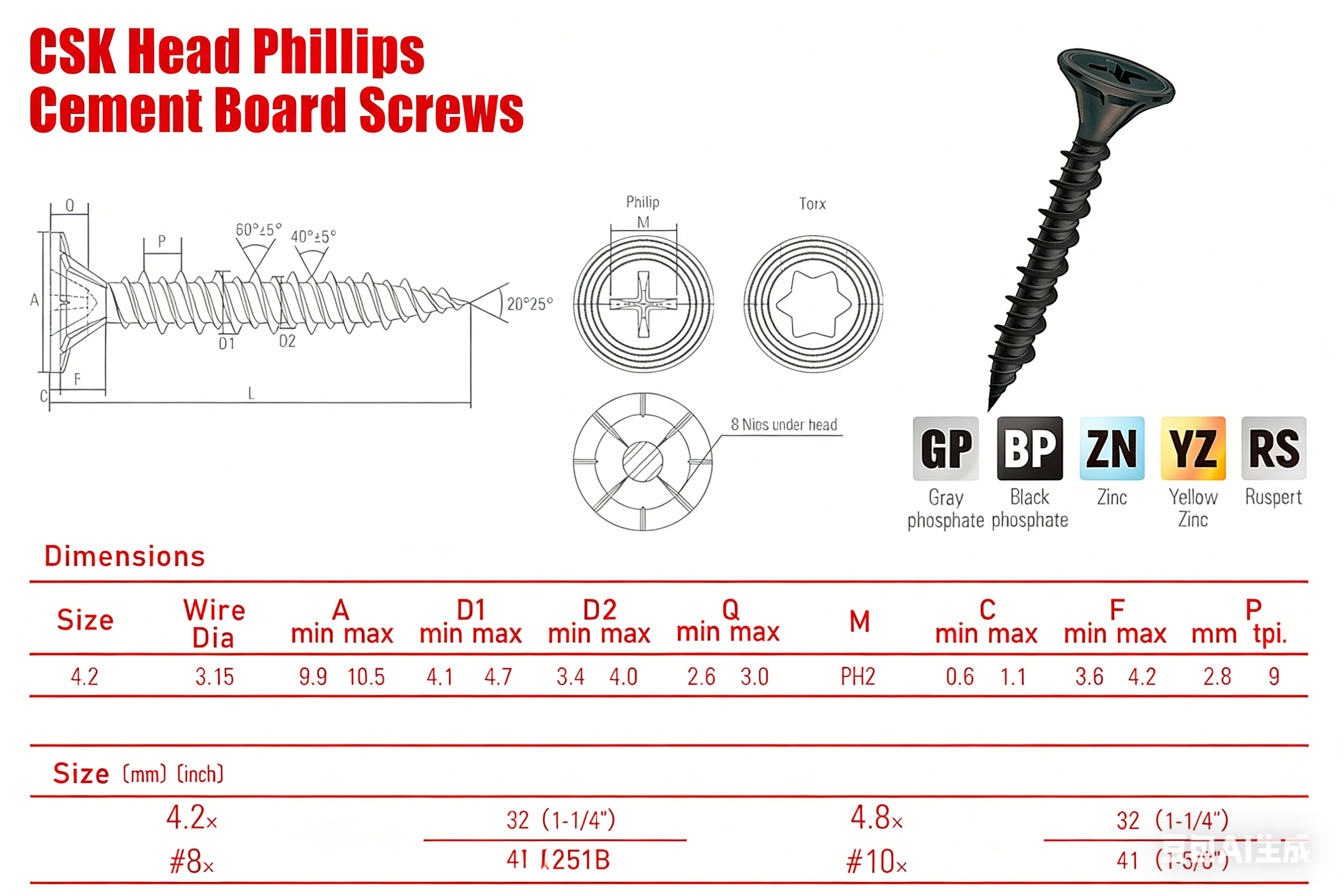
3.3 Technical Drawings
IV. Production Process
Raw Material: Selection of high-quality low or medium carbon steel wire rod. Stainless steel screws use 304 or 316 material wire.
Cold Heading: Precision forming of the screw head, shank, and preliminary point shape on multi-station cold heading machines.
Thread Rolling: Using precision dies to roll-form the special Hi-Lo dual-lead threads, which are key to performance.
Point Machining: Special grinding of the tip to form the self-drilling point with cutting flutes, followed by hardening treatment.
Heat Treatment (for Carbon Steel): Quenching and tempering to give the screw excellent “hard yet tough” mechanical properties.
Surface Treatment:
Cleaning & Phosphating: Preparation for coating.
Coating: Application of epoxy resin or other polymer coatings via electrostatic spraying or dip coating processes, followed by high-temperature curing to form a uniform, strongly adherent colored anti-corrosion layer.
Quality Inspection: Includes full dimensional inspection, hardness sampling, salt spray testing, simulated installation torque testing.
Packaging: Moisture-resistant packaging, sorted by specification and quantity.
V. International & Industry Standards
Product Standards:
USA: ASTM C1513 (Standard Specification for Self-Drilling Tapping Screws for Cementitious Board Applications)
General: ISO 15480 (provides performance references for similar products)
Performance Testing Standards:
Corrosion Testing: ASTM B117 (Salt Spray Test), EN ISO 9227
Mechanical Testing: Torque testing, pull-out testing, etc., refer to general fastener standards.
Application Specifications: Adhere to the official installation guidelines of panel manufacturers (e.g., USG (USA), Saint-Gobain (France), Taishan (China)), which clearly specify screw types and spacing.
VI. Selection & Installation Guide
6.1 Selection Guide
Determine Panel & Stud: Clarify cement board thickness and stud material (metal/wood) and thickness.
Calculate Length: Screw Length = Panel Thickness + Minimum Stud Embedment Depth (recommended 10mm for metal studs, 15mm for wood studs). Common specifications: 25mm screws for 9.5mm board, 32mm screws for 12mm board.
Choose Corrosion Resistance Grade:
Dry Interior: Zinc-plated screws.
Wet Areas (Bathrooms, Exteriors): Must use colored corrosion-resistant coated screws.
Extreme Environments: Stainless steel screws.
Choose Head Type: Choose Bugle Head for standard flat surfaces; choose Washer Head for extra sealing or vibration resistance.
6.2 Professional Installation Steps
Tool Preparation: Use a clutch-controlled (adjustable torque) electric screwdriver/drill fitted with a matching Phillips #2 (PH2) or Pozidriv #2 (PZ2) bit.
Torque Setting: Based on manufacturer recommendations or starting with low torque, adjust until the screw drives smoothly and the head sits flush with or slightly recessed (≤1mm) below the panel surface.
Installation Operation: Keep the screw perpendicular to the panel surface, apply steady downward pressure and drive continuously until the clutch disengages. Avoid pausing mid-drive or repeatedly driving/backing out.
Fastening Spacing: Typically follow:
Edge Fastening: Screw center at least ≥10mm from the panel edge.
Screw Spacing: 150-200mm on panel edges, 300mm in the field (Always adhere to the panel manufacturer’s specifications).
6.3 Common Errors & Prohibitions
Prohibition: Using ordinary drywall screws instead of cement board screws (can lead to rust and fixation failure).
Prohibition: Using screws that are too short or too long (insufficient grip or risk of damaging opposite side of stud or concealed pipes).
Prohibition: Using hammer/impact drill mode or non-clutch tools for installation (highly likely to cause panel fracture or over-countersinking).
Note: In low-temperature environments, panels become brittle; control installation torque and speed more carefully.